  | ||||
TROMPE L'OEIL and WILDLIFE PAINTINGS
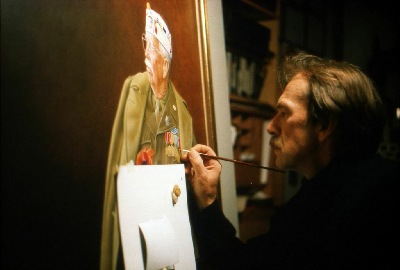
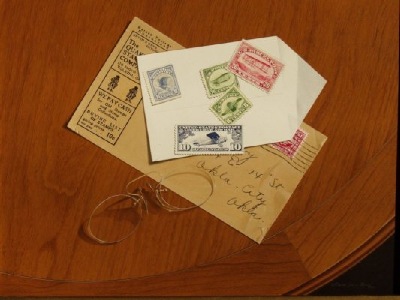
ARTIST AT THE EASEL THE ART OF TROMPE L' OEIL ARTISTS PRACTICING TROMPE I'OEIL PAINTING OVER THE PAST FEW CENTURIES HAVE ALL SUCCEEDED IN ONE THING, TRICKING THE EYE OF THE VIEWER. IN ORDER TO BETTER APPRECIATE SOME OF THESE PAINTINGS, I HAVE INCLUDED SOME CLOSEUP IMAGES OF SEVERAL PIECES. "A BRIEF HISTORY OF FLIGHT IN AMERICA"
Acrylic on Panel 8" x 10"
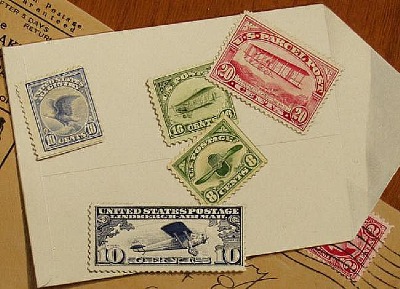
Showing stamps approximately actual size depending on your monitor
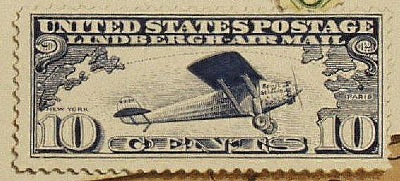
Enlarged view of Lindbergh airmail stamp Painting postage stamps requires additional magnification as an aid to painting fine details. Small brushes are mandatory as is a sewing needle to remove tiny mistakes or to create minute details by 'subtracting' the pigment. A steady hand is also helpful. The dilemma in painting a piece like this is "how far do you want to take it?" Many contemporary trompe l'oeil practitioners do not believe in using unnecessary detail or magnification as an aid to painting, believing, perhaps rightfully so, that the illusion of reality should be complete while observing the painting from a certain distance. When this painting was shown at the 2007 international "Birds in Art" exhibit at the Leigh Yawkey Woodson Art Museum in Wausau, Wisconsin, an elderly gentleman approached me with a question from a lifelong stamp collector friend who had viewed the painting up close the previous evening. The question was "why had I glued the stamps over the painting?" The illusion was complete and the compliment taken in stride. | ||||